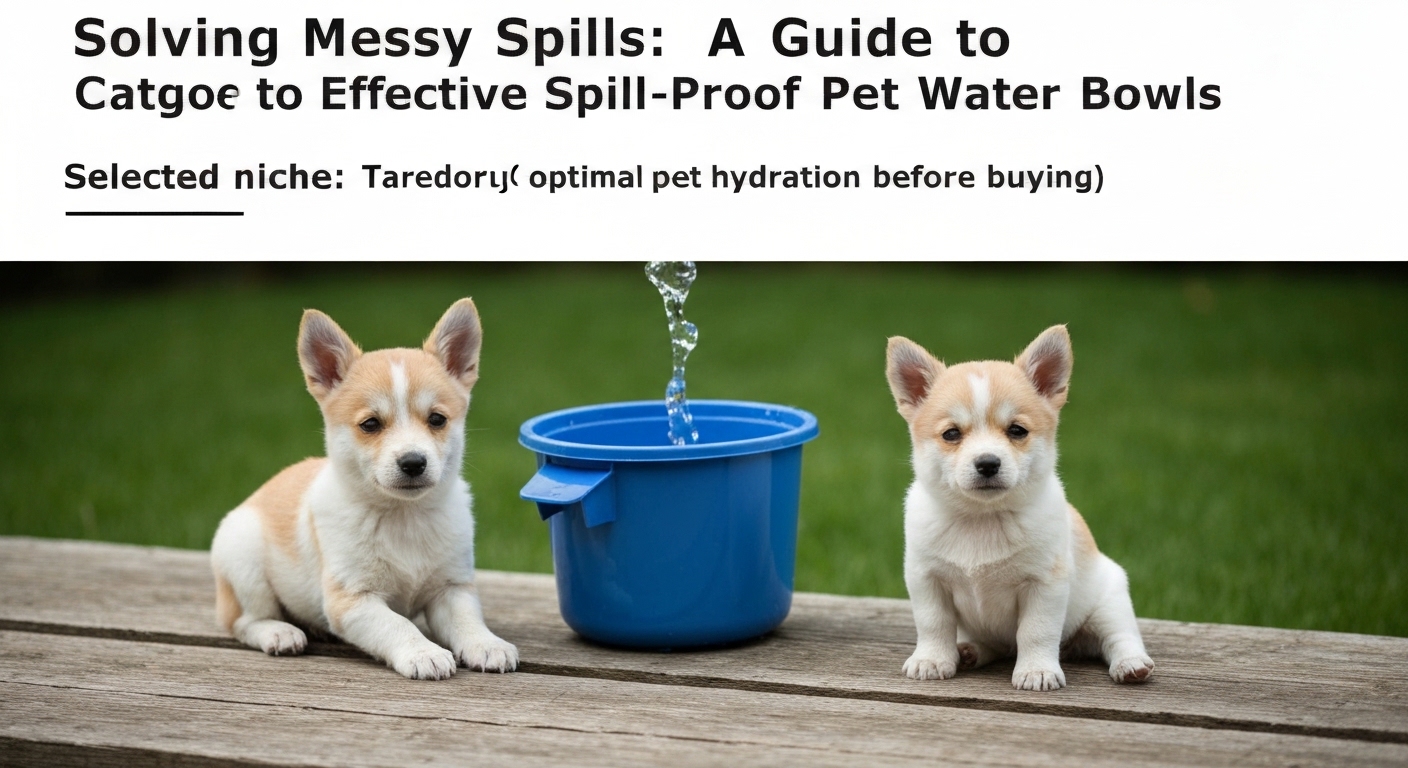
Solving Messy Spills: A Guide to Effective Spill-Proof Pet Water Bowls
Tired of Messy Paws? Discover the Best Spill-Proof Pet Water Bowls
The daily struggle with pet water spills is a familiar challenge for many pet owners. Whether it's enthusiastic lapping that sends splashes across the floor, accidental bumps that overturn a full bowl, or drips from a thirsty muzzle, these messes can quickly turn a clean home into a slippery hazard. Beyond the constant clean-up, unchecked water spills can lead to damaged flooring, unpleasant odors, and even potential slips for both pets and people.
Fortunately, innovative designs in pet water bowls offer a practical solution to these common frustrations. Spill-proof pet water bowls are engineered to minimize or eliminate water messes, providing a cleaner environment while ensuring your pet remains hydrated.
This guide will empower you to make an informed decision, helping you select a spill-proof water bowl that fits your pet's needs and your home environment. You'll learn:
- How various bowl designs manage splashes and prevent accidental spills.
- Essential features and materials that contribute to effective mess reduction.
- Practical trade-offs between different types to match your pet's drinking habits.
- Considerations for maintenance, durability, and overall suitability for your lifestyle.
Beyond the Basic Bowl: How Spill-Proof Designs Keep Floors Dry
The evolution of pet water bowls extends far beyond simple containers, incorporating clever engineering to combat common spill scenarios. Understanding the design principles behind these innovations can help pet owners choose solutions that genuinely address their specific mess challenges. These designs leverage fundamental physical principles to minimize water displacement, restrict access, and enhance stability.
Several core mechanisms contribute to a bowl's ability to prevent spills:
- Floating Disks or Plates: Many spill-proof bowls feature a disk that floats on the water's surface, often with a small central opening. This design limits the exposed water volume, allowing a pet to drink only a small amount at a time. When not actively being used, the disk covers the majority of the water, reducing splashes from enthusiastic lapping or accidental bumps. This mechanism primarily relies on restricted access and surface tension to keep water contained.
- Weighted Bases and Wide Footprints: To counteract accidental tipping, some bowls are designed with a heavy base or a broad, stable foundation. The principle here is simple: a lower center of gravity makes the bowl significantly harder to overturn. This design directly addresses spills caused by pets bumping into the bowl or moving it across the floor.
- Tapered or Inward-Sloping Edges: Bowls with rims that curve inward or feature a raised lip are engineered to catch splashes and drips before they escape. As a pet drinks, any water that might slosh over the edge is redirected back into the bowl. This physical barrier works by altering the trajectory of splashing water, making it a key feature for pets prone to messy drinking.
- Enclosed Designs and Anti-Splash Guards: More comprehensive solutions may involve bowls with high, sometimes partially covered, walls or integrated splash guards. These designs create a larger containment area around the water source, trapping splashes and drips within the bowl's immediate vicinity. Some versions might even feature a small, controlled opening for water access, further limiting the potential for external mess.
- Anti-Slip Features: While not directly containing water, elements like rubberized feet, silicone rings, or textured bases are crucial for spill prevention. By increasing friction with the floor, these features prevent the bowl from sliding, which can otherwise lead to sloshing, tipping, or even complete overturns.
It's important to differentiate between "spill-resistant" and "truly spill-proof." Most bowls marketed as "spill-proof" are, in practice, highly "spill-resistant." They excel at minimizing splashes, containing drips, and resisting accidental tipping. However, a truly spill-proof container would typically imply a fully sealed system capable of being inverted without releasing any liquid, which is rarely the case for an open-access pet water bowl. For stationary home use, the goal is often robust spill resistance that significantly reduces daily messes, rather than absolute, hermetic sealing.
Choosing Your Spill-Proof Solution: Essential Features & Buying Criteria
Selecting the right spill-proof pet water bowl involves understanding how different designs address mess and meet your pet's needs. Evaluating key features against your specific circumstances will help you find an effective solution, ensuring a cleaner home and consistent hydration for your companion.
Consider the following criteria when exploring spill-proof water bowls:
-
Material Considerations The bowl's material impacts durability, hygiene, and overall safety.
- Stainless Steel: Known for being durable, rust-resistant, and easy to clean. It's generally considered hygienic as it doesn't harbor bacteria easily and is often dishwasher-safe. However, it can be noisy if bumped, and some designs might lack grip on smooth floors.
- Ceramic: Offers a heavy, stable base, reducing tipping. It's often aesthetically pleasing and easy to clean, but it can be fragile and break if dropped. Glazes should be lead-free and food-safe.
- Plastic: Lightweight and often more affordable. Look for BPA-free, food-grade plastics to ensure safety. Plastic can scratch over time, potentially harboring bacteria, and may absorb odors. Regular, thorough cleaning is crucial.
- Silicone: Flexible, non-slip, and often collapsible, making it suitable for travel. It's generally safe and easy to clean, but some pets might chew on softer silicone, and its flexibility can sometimes lead to instability if not properly secured.
-
Capacity and Size Matching the bowl's volume to your pet's daily water intake and size prevents frequent refills and ensures adequate hydration.
- Pet Size: Larger breeds require bowls with greater capacity to avoid running dry.
- Number of Pets: Multiple pets will need a larger bowl or multiple bowls to meet their combined hydration needs.
- Daily Consumption: Consider your pet's activity level, diet (wet vs. dry food), and climate, as these influence how much water they drink. A bowl that's too small means more frequent refilling, while one that's too large might not be practical for smaller spaces or quick cleaning.
-
Cleaning and Maintenance Ease of cleaning directly impacts hygiene and prevents the buildup of slime or mold.
- Disassembly: Bowls with multiple parts should be easy to take apart and reassemble for thorough cleaning. Complex designs might deter regular maintenance.
- Dishwasher Compatibility: Many materials, especially stainless steel and certain plastics, are dishwasher-safe, simplifying the cleaning process.
- Slime Prevention: Designs that expose less water surface area or use materials less prone to bacterial adhesion can help reduce slime formation. Regular cleaning, regardless of material, remains paramount.
-
Stability Features Effective spill prevention often starts with a stable base.
- Weighted Bases: Heavier bowls, often ceramic or those with added weight, are less likely to be nudged or tipped.
- Anti-Slip Rubber Feet: Rubberized bases or feet provide grip on smooth surfaces, preventing the bowl from sliding during enthusiastic drinking.
- Suction Cups: Some designs incorporate suction cups to secure the bowl firmly to the floor, ideal for very active or playful pets.
-
Portability vs. Stationary Use Your lifestyle dictates whether you need a bowl primarily for home or one that can travel.
- Stationary Use: Bowls for home can be larger, heavier, and focus on maximum spill protection without portability constraints.
- Portability: Travel-friendly options often feature secure lids, collapsible designs, or compact shapes with specific seals to prevent leaks during transport. Consider if the spill-proof mechanism works effectively when moving.
-
Pet Compatibility Different pets have unique drinking styles and physical characteristics that influence bowl suitability.
- Long-Eared Dogs: Designs with a narrower opening or a floating disk can help keep long ears dry, preventing ear infections and messy drips.
- Snub-Nosed Breeds: Flat-faced dogs may struggle with deep bowls. Wider, shallower designs or bowls with a sloped interior can make drinking more comfortable and less messy.
- Puppies: Lightweight or easily tipped bowls can be a hazard for playful puppies. Look for stable, durable options that can withstand chewing.
- Drinking Styles: For "gulpers" or those who splash excessively, bowls with restricted access, floating disks, or splash guards can significantly reduce mess. Consider how your pet interacts with water to choose a design that complements their habits.
The Reality of 'Spill-Proof': Trade-offs and What to Expect
The term "spill-proof" often suggests an absolute guarantee, but in the context of pet water bowls, it's more accurately understood as "spill-resistant" or "spill-reducing." No design can entirely eliminate the possibility of spills under all circumstances, especially with determined pets or unusual events. Understanding these inherent limitations and potential trade-offs is crucial for setting realistic expectations and selecting a bowl that genuinely meets your needs without creating new frustrations.
Before investing in a spill-proof solution, consider these potential downsides and practical considerations:
- No 100% Guarantee: While advanced designs significantly reduce splashes and accidental tipping, extreme pet play, intentional disruption, or severe impacts can still lead to water escaping. The goal is to minimize, not eradicate, all potential mess.
- Potential for Reduced Water Intake: Some designs, particularly those with floating disks or restricted access openings, might initially deter certain pets. Dogs or cats unaccustomed to these mechanisms may drink less, requiring owners to monitor hydration levels and potentially introduce the new bowl gradually.
- Cleaning Complexity: Bowls with multiple parts, intricate floating mechanisms, or narrow crevices can be more challenging to clean thoroughly than a simple open bowl. Regular disassembly and cleaning are essential to prevent bacterial growth and maintain hygiene, which can add to your routine.
- Durability Concerns: Moving parts, springs, or specialized plastic components designed for spill resistance may be subject to wear and tear over time. Materials might degrade, or mechanisms could fail, potentially reducing the bowl's effectiveness or requiring replacement sooner than a basic, solid bowl.
- Cost vs. Benefit: Spill-proof bowls often come at a higher price point than conventional options. It's important to weigh the cost against the actual reduction in mess and the value of a cleaner home, considering whether the specific features justify the expense for your pet's habits and your household.
- Pet Interaction Challenges: Curious or destructive pets might view complex bowl mechanisms as a new toy. Some dogs may try to chew on floating parts, lift inner components, or actively try to "defeat" the spill-proof features, potentially damaging the bowl or creating a new type of mess.
Finding the Perfect Fit: Matching a Spill-Proof Bowl to Your Pet's Needs
Selecting the ideal spill-proof water bowl involves more than just identifying general features; it requires a thoughtful assessment of your pet's unique habits and your household environment. By considering specific scenarios and behaviors, you can pinpoint a design that truly minimizes mess while ensuring consistent hydration.
Begin your decision process by asking a few key questions:
- What type of mess am I primarily trying to prevent? Is it enthusiastic splashing, accidental tipping, water tracked from a wet muzzle, or debris falling into the bowl?
- How often am I willing to clean the bowl and its components? Some designs offer superior spill protection but might involve more intricate cleaning.
- Does my pet have specific behaviors or physical characteristics that impact their drinking? This includes factors like breed, age, activity level, and how they interact with their water source.
Different bowl types excel in specific situations, offering targeted solutions for various challenges.
Adapting to Pet Behavior and Household Scenarios
Your pet's personality and your living situation are crucial determinants in selecting the most effective spill-proof design.
-
For the Energetic or Rambunctious Pet: Puppies and highly active dogs can easily overturn traditional bowls. Look for bowls with:
- Heavy, weighted bases or non-slip rubber feet to resist tipping.
- Secure, wide footprints that make accidental bumps less likely to cause a spill.
- Crate-attachable designs if your pet is crated, preventing spills in confined spaces.
-
For the Persistent Splasher or "Digger": Some pets enjoy pawing at their water or lap with such vigor that water goes everywhere.
- Floating disc designs restrict the surface area of water accessible at one time, significantly reducing splashes and limiting the amount of water available for pawing.
- Bowls with inward-curving rims or high sides can contain splashes within the bowl itself.
-
For Long-Eared Breeds: Dogs like Basset Hounds or Cocker Spaniels often drag their ears through their water, leading to wet ears and drips across the floor.
- Narrow-opening bowls or elevated designs with smaller water surfaces can help keep ears dry.
- Floating disc bowls also serve this purpose by keeping ears out of the main water reservoir.
-
For Multi-Pet Households: If you have several pets, consider the combined impact of their drinking habits.
- Larger capacity bowls reduce the frequency of refilling.
- Designs that are robust against tipping become even more important with multiple animals interacting around the water source.
-
For Outdoor Use: Bowls placed outdoors face additional challenges from weather, debris, and potential animal interference.
- Durable, UV-resistant materials like stainless steel or specific plastics are beneficial.
- Designs that can be anchored or are heavy enough to resist wind and animal interference.
- Features that deter insects or prevent leaves from falling in can also be a plus.
-
For Travel: When on the go, portability and absolute leak-proofing are paramount to prevent spills in vehicles or hotel rooms.
- Portable designs with secure, sealed lids are essential.
- Collapsible bowls with spill-resistant features offer convenience without sacrificing mess prevention.
By aligning the specific challenges you face with the inherent design strengths of different spill-proof bowls, you can make an informed choice that keeps your home cleaner and your pet happily hydrated.
Your Top Questions About Spill-Proof Pet Water Bowls Answered
Understanding the nuances of spill-proof pet water bowls can help clarify expectations and guide your selection. Here are answers to common questions pet owners have about these innovative solutions.
-
Are spill-proof bowls truly 100% spill-proof? No, the term "spill-proof" is generally a marketing descriptor for designs that are highly "spill-resistant" or "spill-reducing." While these bowls significantly minimize splashes, drips, and accidental tipping, extreme circumstances like intentional pet play, severe impacts, or very vigorous lapping can still result in some water displacement. The primary goal is to drastically reduce the frequency and volume of spills, not to guarantee absolute dryness under all conditions.
-
How often should I clean a spill-proof pet water bowl? Regular cleaning is essential, often requiring more attention than a standard open bowl due to their design. Components like floating disks, splash guards, or internal reservoirs can harbor bacteria and algae if not cleaned thoroughly.
- Daily: Rinse the bowl and its components with fresh water.
- Weekly: Disassemble the bowl (if applicable) and wash all parts with warm water and pet-safe dish soap. Ensure all nooks and crannies are scrubbed, then rinse thoroughly.
- Considerations: Factors like your home's water quality, your pet's slobber level, and environmental humidity can influence cleaning frequency.
-
Can a spill-proof bowl affect my pet's drinking habits or water intake? Potentially, yes. Some pets may need an adjustment period to get accustomed to a new drinking mechanism, especially bowls with floating disks or restricted access openings. Monitor your pet's water intake closely during the transition. Ensure the bowl's design allows comfortable access for your pet's snout and tongue without causing frustration. If you notice a significant decrease in drinking, the bowl's design might not be a good fit for your pet's comfort or natural drinking style.
-
Are they safe for all types and sizes of pets? Generally, spill-proof bowls are designed with pet safety in mind, using food-grade materials. However, the fit of the bowl to your specific pet is crucial.
- Size Match: A bowl designed for a large dog might be too deep or have an opening too wide for a small cat or puppy, potentially making it difficult to reach the water or posing a minor submersion risk. Conversely, a bowl too small for a large breed might restrict their ability to drink comfortably.
- Design Considerations: Ensure there are no small parts that could be chewed off and ingested, and that the materials are durable enough to withstand your pet's habits.
-
What is the difference between a 'spill-proof' and a 'no-spill' bowl? In the context of pet water bowls, these terms are often used interchangeably by manufacturers to describe products designed to minimize water messes. Functionally, there is no standardized distinction; both refer to bowls engineered with features like splash guards, weighted bases, or floating mechanisms to contain water. The key is to evaluate the specific design features and their effectiveness rather than relying solely on the label.
-
Can I use a spill-proof bowl for food as well? Most spill-proof water bowls are not designed for food. The mechanisms that make them effective for water (e.g., floating disks, narrow openings, internal reservoirs) would typically make it difficult for pets to access kibble or wet food. Wet food would also quickly contaminate the bowl's components, making cleaning challenging and potentially unhygienic. If you're seeking a combined solution, look for integrated pet feeding stations specifically designed with separate compartments for both food and water.
Enjoy a Cleaner Home: The Right Spill-Proof Bowl Awaits
Navigating the world of spill-proof pet water bowls empowers you to transform a common household frustration into a manageable aspect of pet ownership. By understanding the nuances of design, material, and real-world performance, you're now equipped to make an informed choice that benefits everyone in your home.
The right spill-proof water bowl offers multiple advantages:
- Enhanced Cleanliness: Significantly reduces splashes, drips, and accidental spills, keeping floors dry and clean.
- Improved Safety: Minimizes slip hazards for both pets and people, and protects flooring from water damage.
- Greater Convenience: Less time spent on clean-up means more quality time with your pet and a more relaxed home environment.
- Consistent Hydration: Ensures your pet always has access to fresh water without the risk of an empty, overturned bowl.
Confidently apply the criteria and insights gained from this guide to evaluate options. Selecting a bowl that aligns with your pet's drinking habits and your lifestyle is an investment in daily peace of mind. A thoughtfully chosen spill-proof water bowl is more than just a container; it's a step towards a cleaner, safer, and happier home for both you and your beloved companion.
More in Pet Water Bowls
View All